New games for the Amstrad CPC
One game, made for the machine I learned to program on. Two-player co-op, in 64K, with physical editions on cassette and disc.
The first one
The Amstrad CPC was the first computer that came into my house. It arrived as a gift when I had already accepted I would never have one, after years of looking at my friends' Spectrums, MSXs and Commodores. It came with a green phosphor monitor.
I learned BASIC on it. I fed it my first cassettes, played with my cousins and with the friends who came round, and swapped games in the school playground. If I have to point at where all this starts, it starts there.
With The Curse of Trasmoz I had already scratched an itch: the ZX Spectrum, the rubber-keyed one I never had as a kid. Now it was the Amstrad's turn. And any old game would not do.
The first attempt
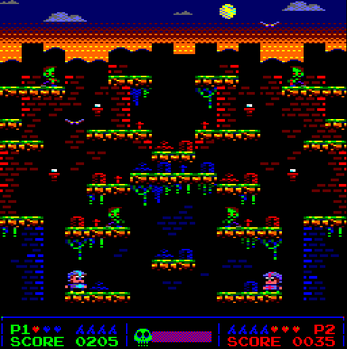
When The Curse of Trasmoz was done, the first thing we tried was porting it straight to the Amstrad. These are two tests from back then, in Mode 1: four colours, more horizontal resolution, the 1UP and 2UP scoreboard already in place.
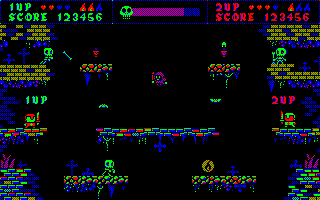
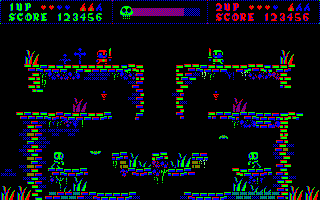
[ Mode 1 tests, before the game moved to Mode 0 ]
It worked, but it felt thin. A port meant repeating something we had already made, and along the way we had seen what the machine could really do. So we changed plan: instead of porting the first game, make the second one.
A sequel, not a port
Everything left out of the Spectrum game went in here. None of it came free, and all of it was solved by Carlos Perezgrin's code on CPCtelera.
Two players at once. Both on screen, each with a joystick or with keys comfortable enough that nobody loses because of the keyboard. It is what changes the game: alone it is a hard arcade game, in pairs it is something else.
A vertical arcade screen. Like Donkey Kong. That means touching the Amstrad's CRTC and splitting the raster, which is not quite what the machine expects you to do.
Two video modes at once. The game runs in Mode 0, which gives 16 colours and chunky pixels, and the scoreboard in Mode 1, which gives the resolution to keep the numbers crisp. They alternate on the same screen, double-buffered so nothing flickers.
64K and not one byte more. Carlos was clear from the start: no juggling the expanded memory of the bigger Amstrads. That forced a lot of condensing, but it means the game runs on a plain CPC 464.
Where Trasmoz comes from
Trasmoz is a real place: a village of about fifty people on the slopes of the Moncayo, in Zaragoza, with a castle above it. It is known as the only excommunicated and cursed village in Spain.
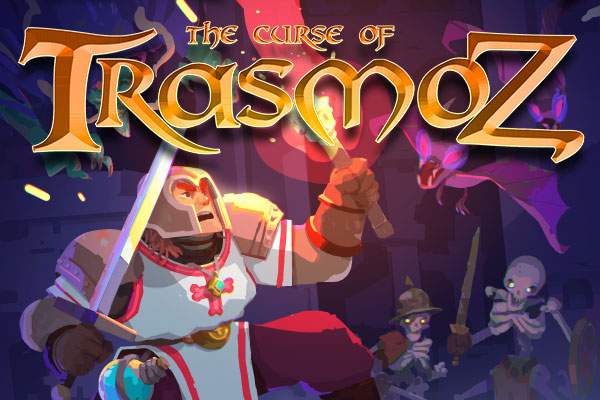
I started reading about it looking for a story with roots here, and found something better than a legend: I found a court case. In 1267, coins were being forged in the castle of Trasmoz. We know because somebody talked. The man in charge of the minting was Blasco Perez, brother of the lord of Trasmoz and sacristan of Tarazona. The condemned were tied inside sacks and thrown into the Ebro. He, being a churchman, was held prisoner by the bishop until he died. The castle's official heritage record adds that this same Blasco Perez was "apparently devoted to witchcraft".
From there comes the version I like best: that the forgers fed the witch rumours so nobody would come near at night and hear the dies at work. That part is not documented, and neither is the perpetual excommunication.
So Trasmoz works like the Japanese games I grew up on: a real sediment, and on top of it a fiction that takes every liberty. We made a good deal of it up, starting with Mutamin, who came out of no archive at all.
Revenge of Trasmoz
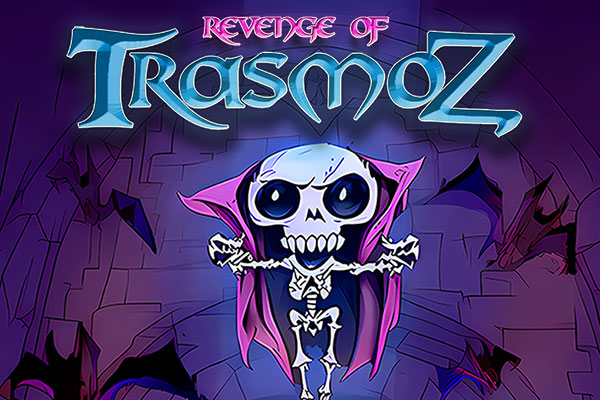
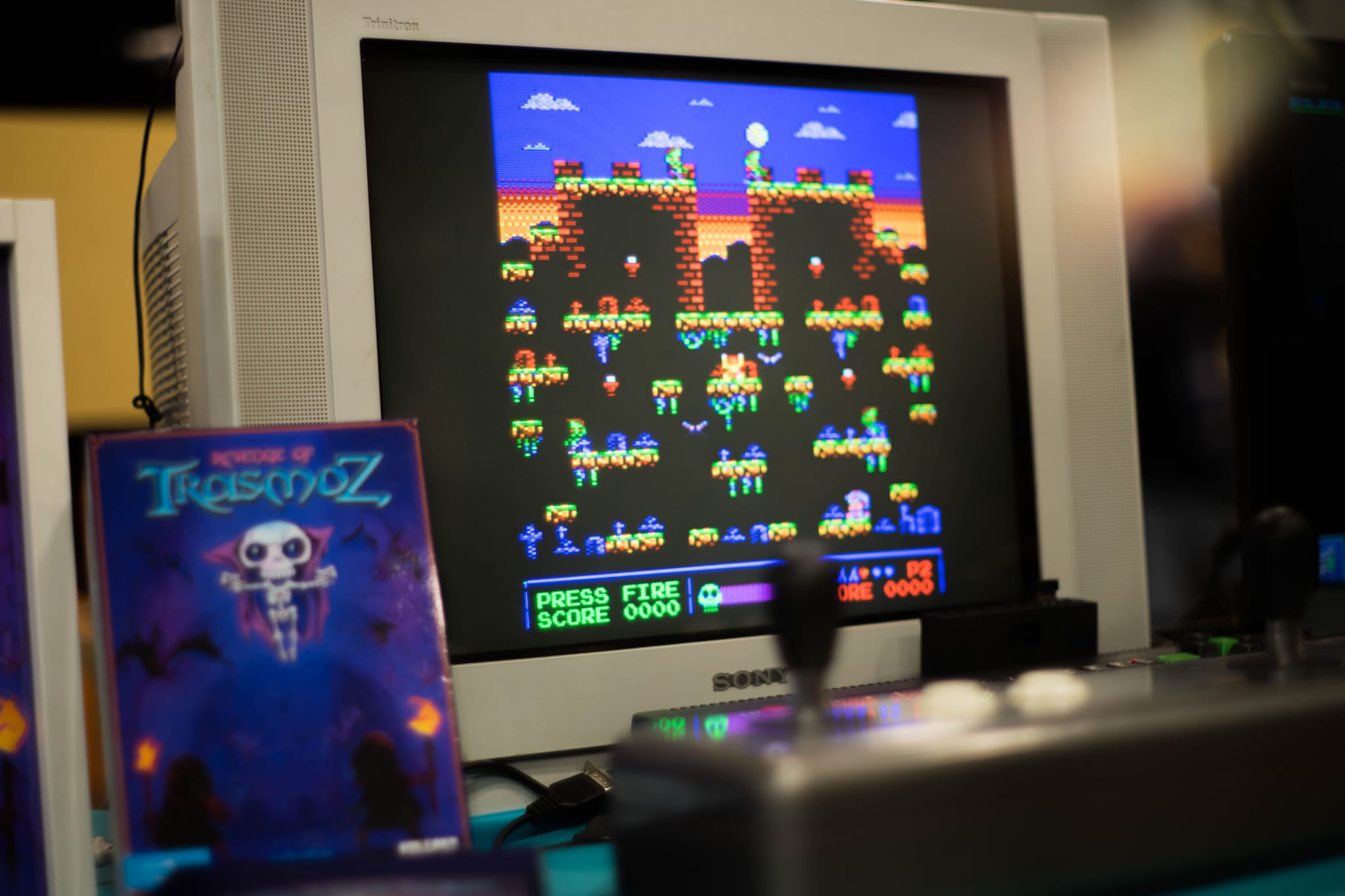
The definitive CPC sequel. Featuring 2-player co-op mode and the debut of the skull-monster Mutamin. A true 8-bit challenge that pushes the Amstrad hardware to its limits.
Five awards at Amstrad Eterno 2024
Best Videogame · Best Arcade · Best Physical Edition · Best Soundtrack · Most Original Game
What the press said
"This is great fun with excellent graphics and sound. The single-screen playfields wrap around at the edges, making for very tactical play. It is even better than its predecessor; a high-quality production for the Amstrad CPC. 86%"
RETRO GAMER UK"Revenge of Trasmoz stands out enormously thanks to its highly polished gameplay and the addiction it provokes, especially in two-player games. Graphically it is very beautiful, featuring a great selection of colors that allows Mode 0 to truly shine. 83%"
RETRO GAMER SPAINYou can hold it in your hand
The three physical editions are published by Polyplay, in Germany. Three formats, so it runs on a cassette-based 464, on a 6128, or on a modern 3.5 drive.
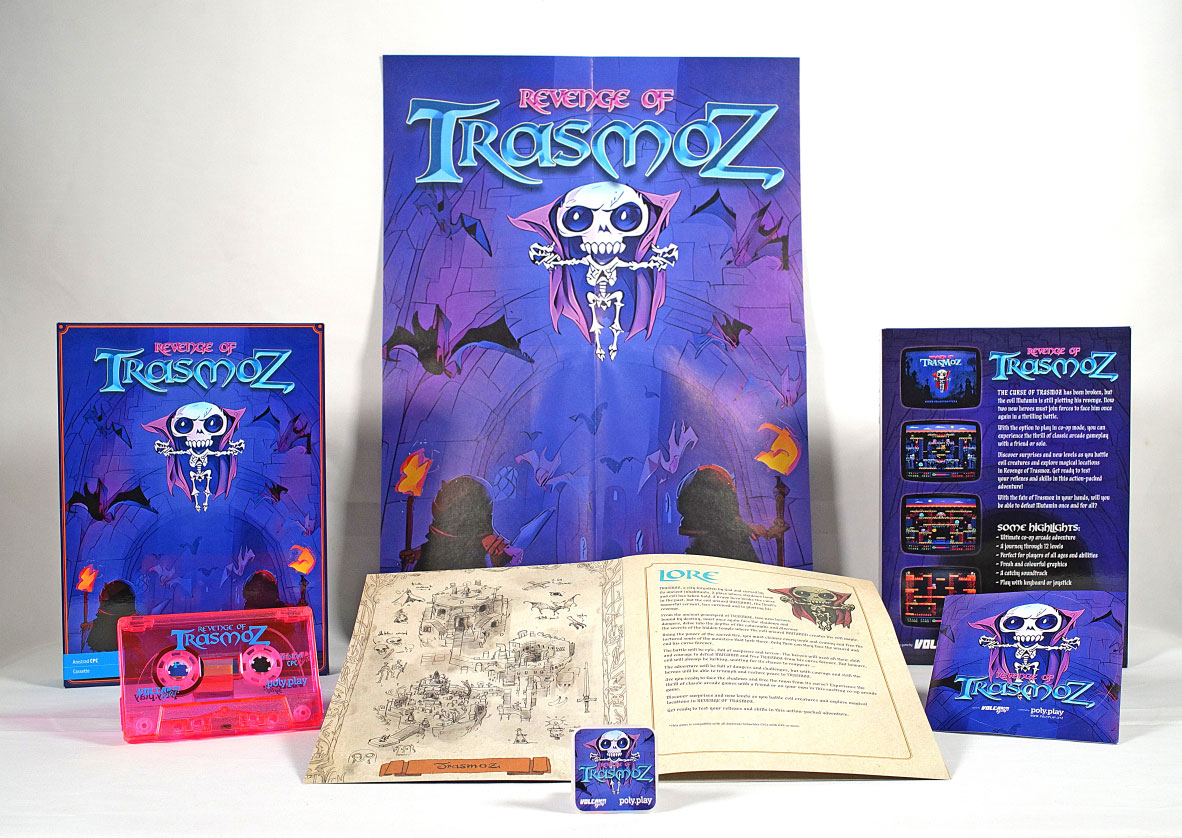
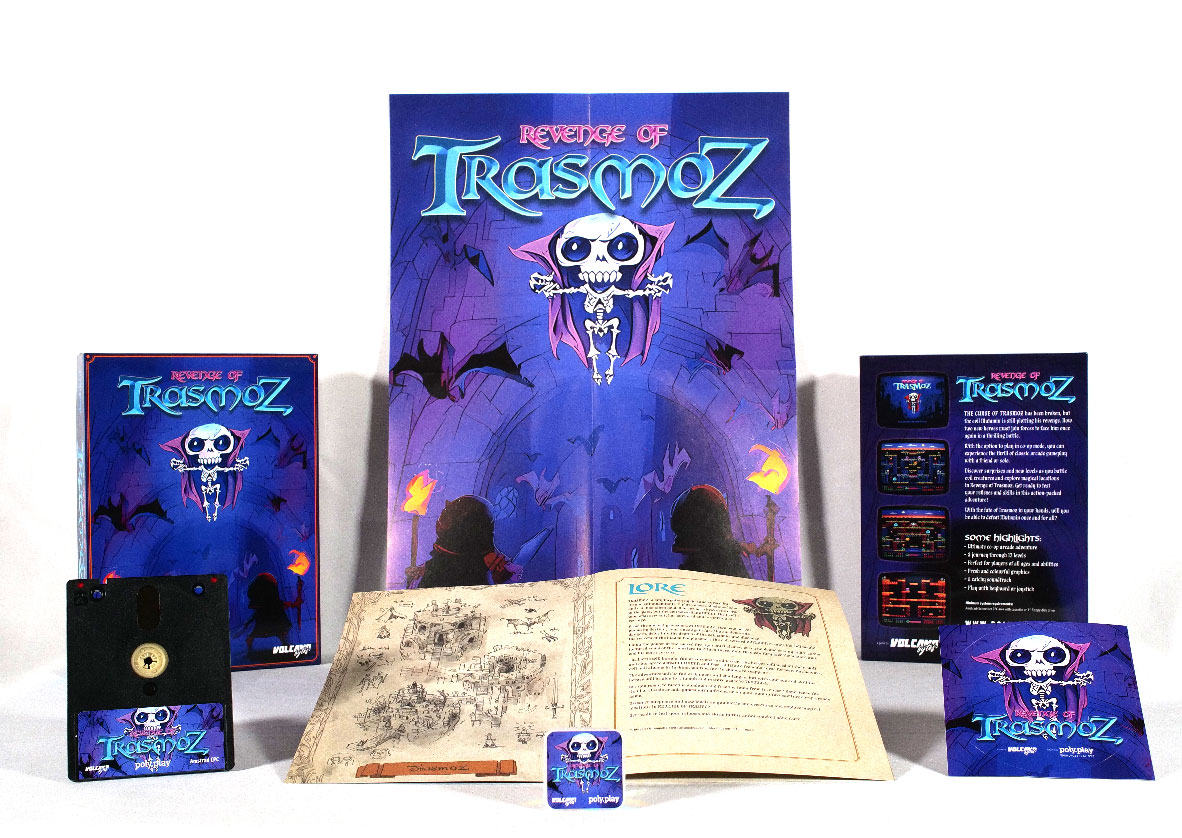
[ The Polyplay editions: cassette, 3'' disc and 3.5'' disc ]